Recently, China's first true AAA title, Black Myth: Wukong, opened for pre-orders, and the numbers have skyrocketed.
As of June 11, the latest weekly sales chart on Steam shows Black Myth: Wukong dominating the list, claiming the No. 1 spot globally, as well as in the China and Hong Kong regions.
The game is scheduled for a simultaneous global release on August 20, 2024, at 10:00 AM, landing on PS5, Steam, Epic Games Store, and WeGame. For a domestic buy-to-play title, this opening is nothing short of a massive victory.
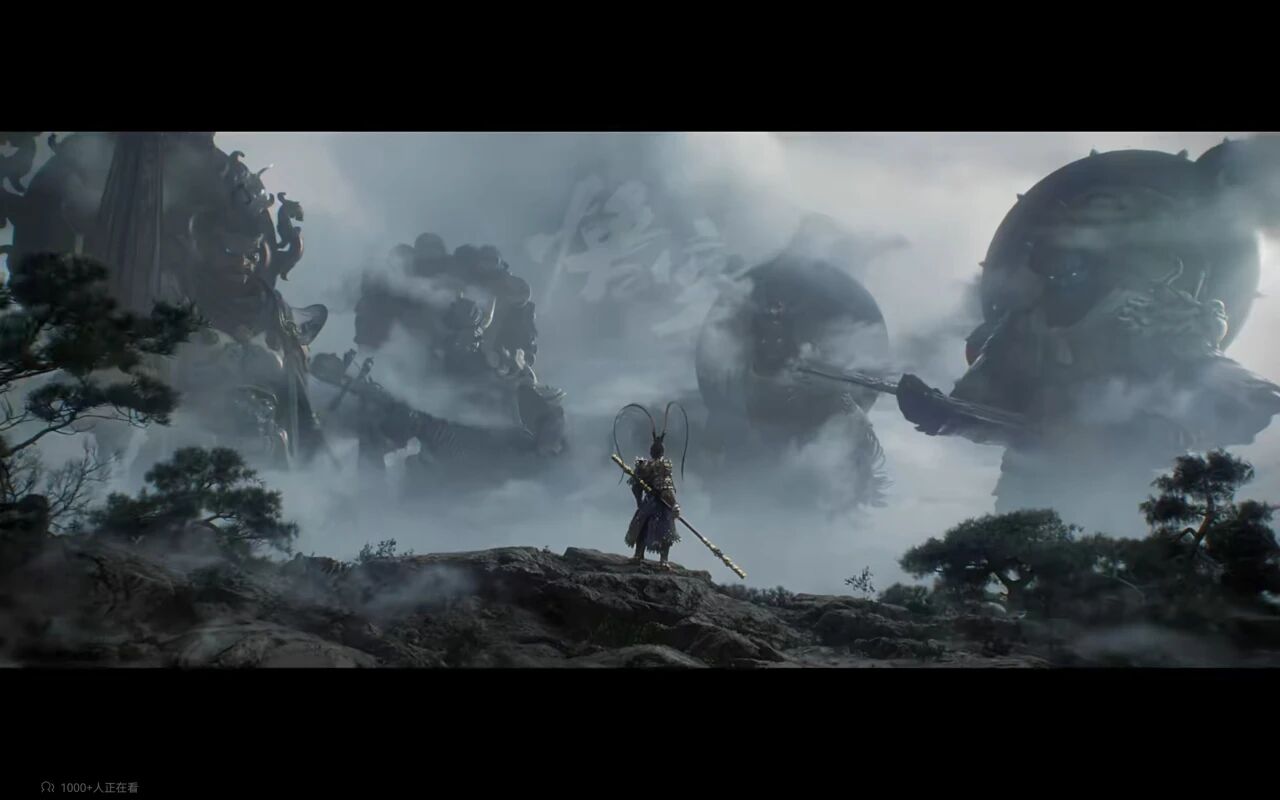
Based on the lore of Journey to the West, the game weaves a rich narrative tapestry while integrating profound traditional Chinese cultural elements. As for quality, veteran players agree it is "Top Tier," setting a new benchmark for Chinese game development.
Why is the quality indisputable? Beyond the storyline, the visuals are breathtaking. Black Myth: Wukong leverages AI technology to elevate the gaming experience to an epic level—refreshing everything from scene rendering and lighting to intricate textural details.
Game Giants Accelerate AI Adoption
Beyond Black Myth: Wukong, major game manufacturers are accelerating the implementation of AI applications.
-
February: Giant Network completed the filing for the first game-vertical Large Language Model (LLM).
-
March: Tencent released its self-developed Game AI Engine, providing comprehensive solutions for development and operations.
-
Early June: PalmFun (Zhangqu Technology) stated that AI is actively reducing costs and increasing efficiency in art creativity and code generation. Their "AI Game Creation Platform," currently under development, is supported by NVIDIA technologies like DLSS and Audio2Face.
According to the 2024 State of the Game Industry Report by GDC, nearly half of game developers are already using Generative AI in their workflows. AI has become the undisputed new engine of game development.
The ESG Connection: AI in Sustainability Reports
In May, Chinese stock exchanges implemented new guidelines requiring major listed companies to disclose sustainability reports. Surprisingly, game companies responded with high enthusiasm.
In their ESG (Environmental, Social, and Governance) reports, technologies like AI and AIGC (AI-Generated Content) were widely highlighted as tools for sustainable growth and efficiency.
From Tool to Partner: The New "Involution" of AI
AI is no longer just a tool; it is becoming a partner.
-
Content Generation: Companies use AI for assets (like the procedural generation in No Man's Sky).
-
Intelligent NPCs: NetEase's Justice Online integrated ChatGPT to allow NPCs to generate logical, free-flowing dialogue and autonomous behavioural feedback.
-
Dynamic Environments: EA's SEED trains NPCs by mimicking top players. Research using neural networks can replicate landscapes (like in GTA V) or simulate complex weather systems (as seen in Jade Dynasty World).
-
Code Testing: AI is now crucial for identifying bugs in increasingly complex codebases, a tedious task for humans.
Seeking Growth Amidst Competition: Back to Basics
The industry is fiercely competitive ("involuted"). Not only are game developers competing, but AI developers are too. With giants like Apple and Google integrating AI directly into their operating systems, standalone AI features are being commoditised.
In this "Second Half" of the AI era, businesses must return to the fundamentals: Cost and Efficiency.
In a saturated market, when pricing power is limited, cost advantage is king. Game developers cannot just focus on the "frontline" of content; they must also fortify their "rear guard"—specifically, their payment infrastructure.
H3: The Hidden 10% Revenue Boost via Waffo Optimising the payment process can yield surprising results. One developer noted a near 10% revenue increase simply by streamlining their payment system.
Key questions developers must ask:
-
Is the checkout flow simplified?
-
Is the experience user-friendly?
-
Is it compliant with local regulations?
-
Can it handle localised payment methods to improve conversion?
This is where Waffo steps in.
As a payment solution provider, Waffo helps game developers optimise payment flows, boost transaction success rates, and enhance customer satisfaction to drive repurchase rates.
In an environment where all costs are rising, choosing a payment partner that understands the specific goals of gaming enterprises is critical. Even a minor improvement in conversion rate can significantly boost the bottom line.
Conclusion It is foreseeable that the game industry will usher in a new round of innovation through AI. However, while innovation is the path to survival, a solid infrastructure foundation—including robust payment solutions—is what allows companies to walk that path further.