The EU's Digital Markets Act (DMA) is hailed as a landmark piece of digital regulation, seemingly purpose-built to curb the monopolies of tech giants. Provisions that were previously vague or hard to investigate under old antitrust laws are now explicit obligations for large platforms under the DMA.
Simultaneously, Japan has launched similar legislative attacks. With regulations tightening on both fronts in June, the global digital ecosystem—especially the gaming industry—is poised for a shake-up.
1. The EU Fires the "First Shot" at Apple
The DMA came into effect on March 7th, and investigations into the App Store and Safari began immediately.
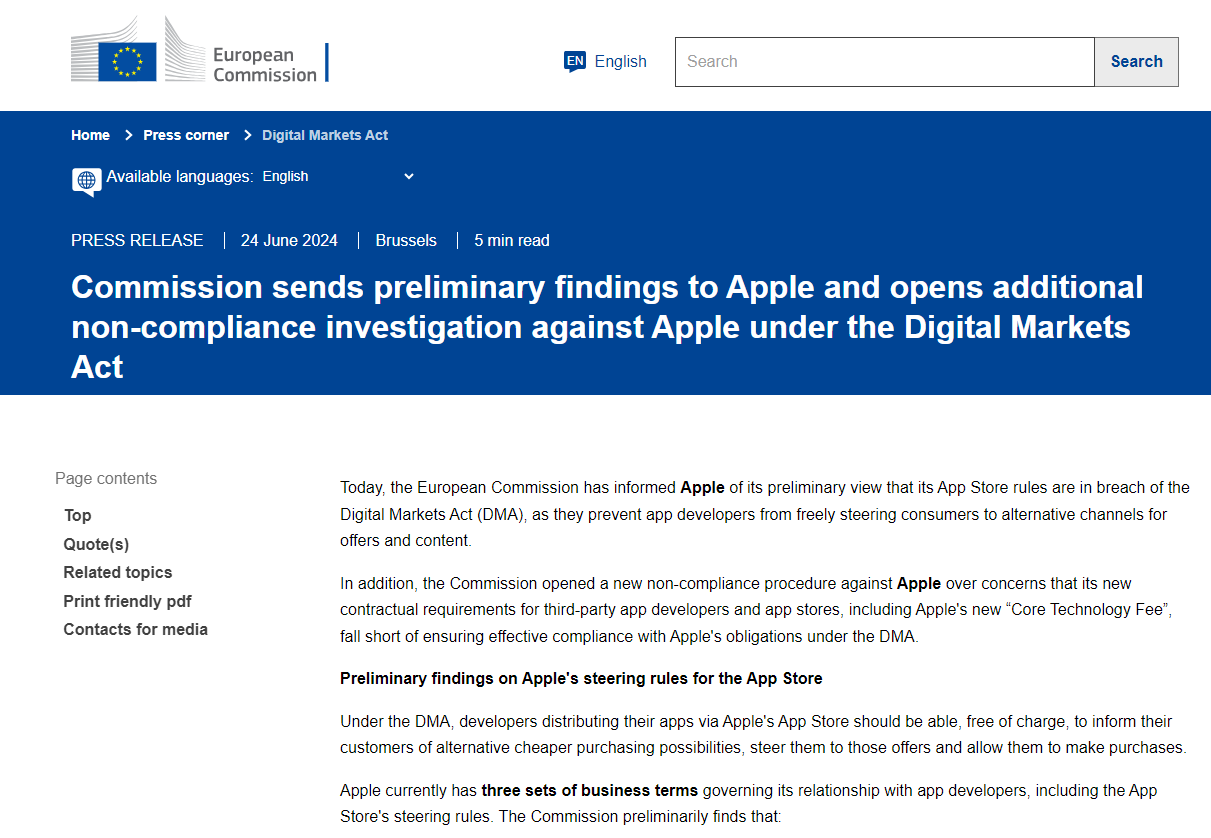
On June 24th, the European Commission released its preliminary findings, marking the first-ever charge brought under the DMA. The Commission accused Apple's App Store of violating the act by restricting developers' ability to "freely steer customers."
Key Accusations:
-
Communication Ban: Apple's terms prevent developers from freely communicating with end-users or concluding contracts with them.
-
Price & Promotion Restrictions: Developers cannot provide pricing info or promote offers available on third-party channels within the app.
-
Link-Only Steering: Apple only permits "link-outs" to web pages, restricting the in-app experience.
Although Apple denies wrongdoing and claims 99% of developers will pay the same or less fees under its new terms, the EU continues to investigate whether these new requirements are necessary and proportionate.
2. Apple Faces a Potential $38 Billion Fine
Apple must now respond to the Commission's findings. A final decision is expected by March 2025.
If found non-compliant, Apple faces fines of up to 10% of its global annual turnover, rising to 20% for repeat offences. Based on Apple's 2023 revenue of $383.3 billion, the potential fine could reach $38.3 billion.
Margrethe Vestager, EU antitrust chief, stated that Apple must decide for itself how to comply with the DMA, rather than waiting for the EU to dictate solutions.
3. Apple's Response: Delayed AI Features & Third-Party Payments
In response to the "First Shot" of the DMA, Apple made a strategic move on June 21st, announcing the delay of "Apple Intelligence," "iPhone Mirroring," and "SharePlay Screen Sharing" for EU users, citing security uncertainties caused by the DMA.
However, Apple has been forced to adjust the App Store.
-
visionOS 1.2: Confirmed to support third-party payment options for EU users.
-
iOS/macOS: Developers can now use alternative payment options, though fees still apply, and the user experience involves redirecting to external web pages.
4. Japan Joins the Fight: New "Smartphone Software Act"
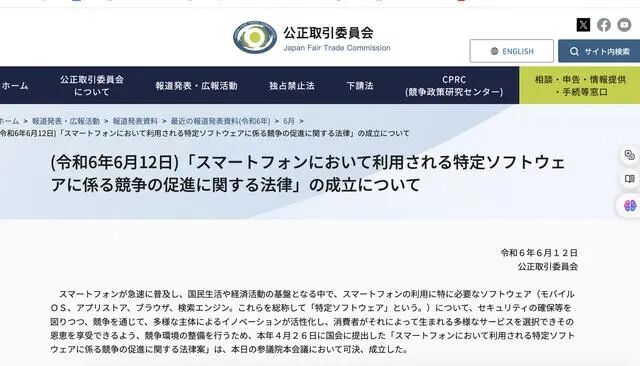
Following the EU, Japan passed the "Act on Promotion of Competition for Specified Smartphone Software" on June 12th, expected to take effect by late 2025.
Targeting the oligopoly of mobile OS, app stores, browsers, and search engines, the Japan Fair Trade Commission (JFTC) aims to break anti-competitive behaviours.
Key Provisions of the Japanese Act:
-
App Store Freedom: "Designated Providers" cannot block third-party app stores without justifiable security reasons.
-
Payment Choice: Explicitly prohibits blocking developers from using third-party payment systems.
-
No Self-Preferencing: Bans discriminatory treatment of developers or favouring the platform's own services in search results.
-
Browser & Data Freedom: Prevents blocking other browser engines and bans the use of service data to compete against third parties.
5. What Does This Mean for Game Developers?
Whether it's the EU's DMA or Japan's new act, the legal framework for the digital economy is shifting. For game developers, this signals a massive opportunity.
1. A Fairer Market & Lower Barriers
The DMA curbs unfair trading practices by tech giants. This allows game developers to scale without fear of suppression, fostering innovation in game mechanics and storytelling.
2. Guaranteed Interoperability
Platforms must allow the installation of third-party app stores. This lowers market entry barriers, allowing developers to reach consumers directly across different devices and operating systems.
3. Lower Operating Costs via Third-Party Payments
Crucially, tech giants can no longer force developers to use their proprietary payment systems.
-
Cost Reduction: Developers can choose more cost-effective payment channels.
-
Waffo's Role: Payment service providers like Waffo offer secure, compliant, and convenient payment services, helping game companies reduce operational costs while ensuring global compliance.
4. Protection of User & Data Rights
The DMA prohibits tech giants from using non-public data generated by business users to compete against them. Game developers no longer need to worry about their data being weaponised by the platform.
Conclusion: Embrace the Change The regulation of "Digital Gatekeepers" is an inevitable market trend. For game export enterprises, the key is to adapt quickly. By leveraging these policy changes and partnering with compliant payment providers like Waffo, developers can optimise their product services and enhance their global competitiveness in a fairer, more open digital world.