Indonesia, the largest economy in Southeast Asia, is a market of immense scale.
-
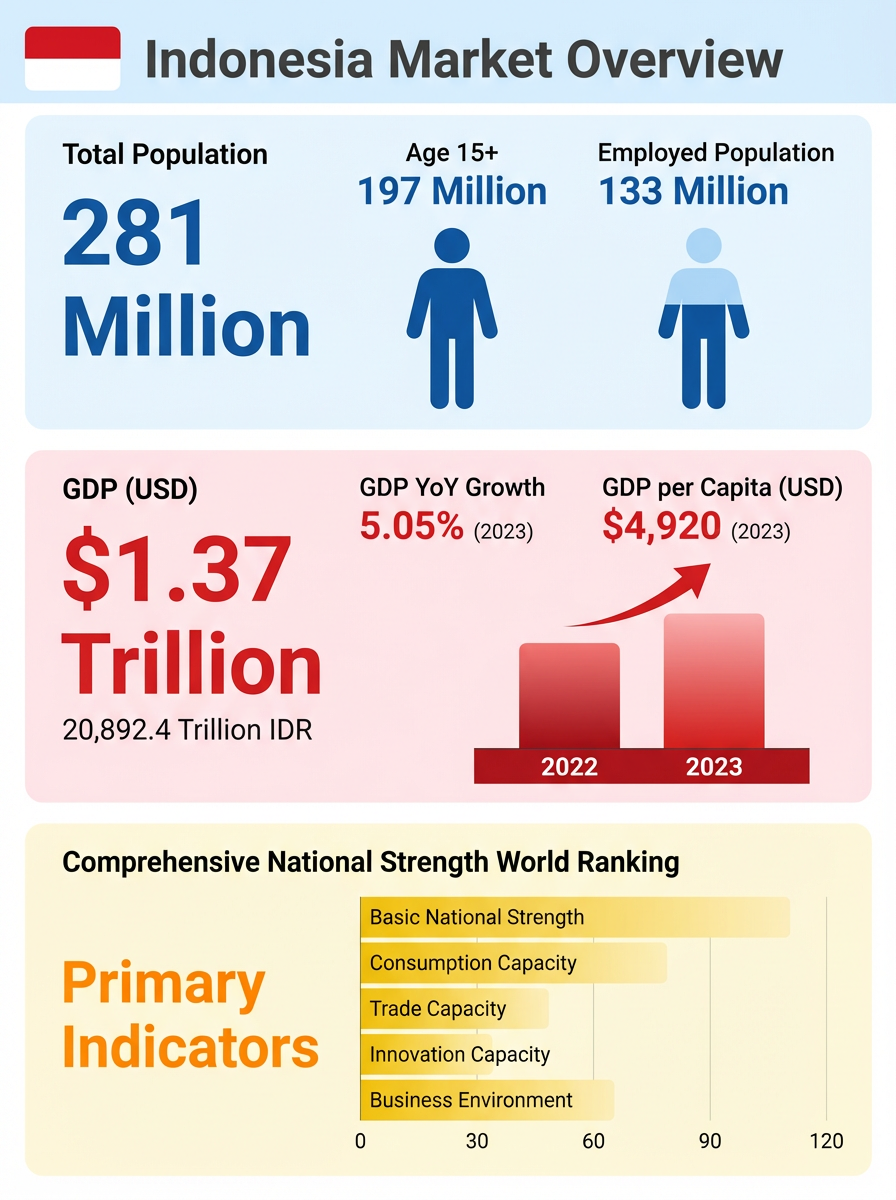
Population Powerhouse: With 281 million people, it is the world's 4th most populous nation. Over half the population is under 30.
-
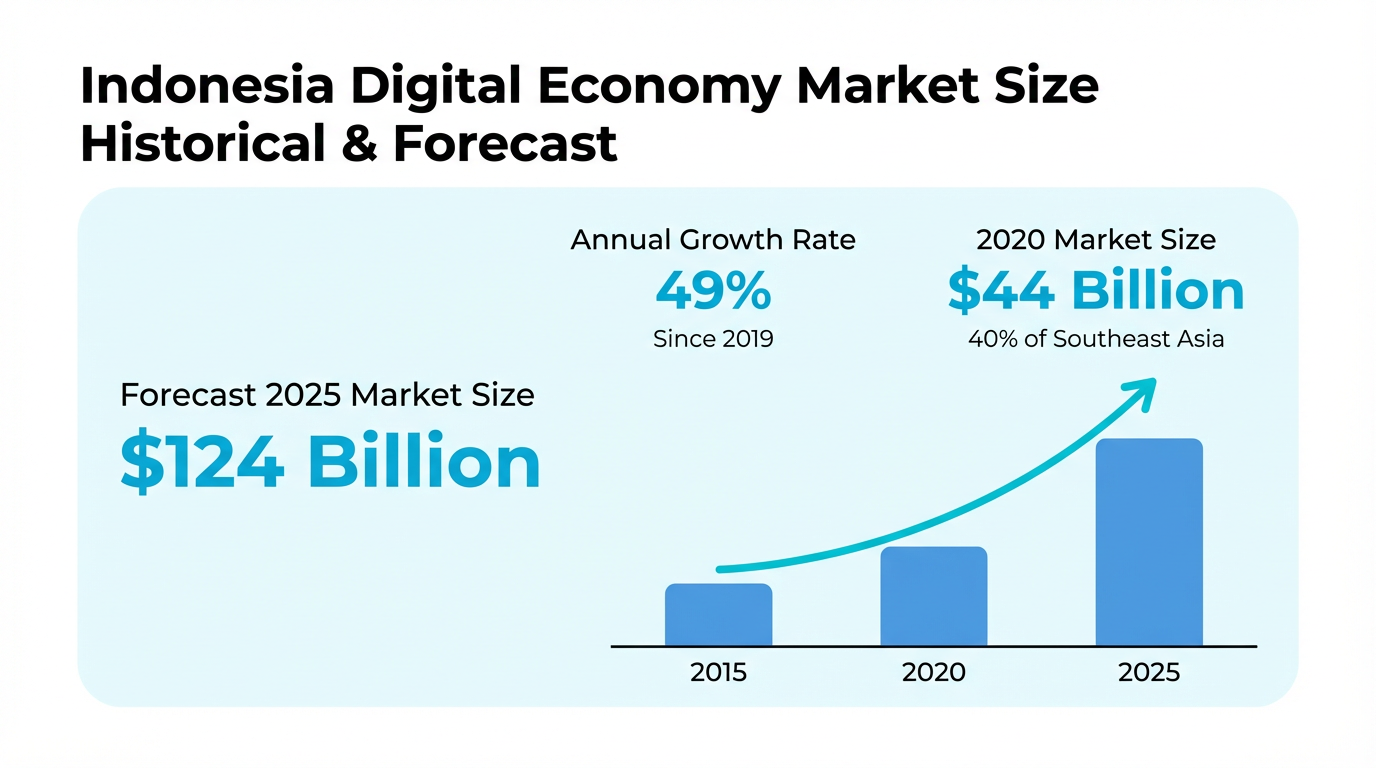
Digital Giant: The digital economy is projected to reach $124 billion by 2025.
-
Economic Growth: GDP grew by 5.05% in 2023, reaching $1.37 trillion.
-
Consumption: Personal consumption accounts for nearly 60% of GDP.
-
Payment Shift: 70% of Indonesians prefer digital payments over cards, driving a massive shift towards e-wallets and QRIS.
01. Overview: The Archipelago Economy
Basic Facts
Indonesia is an upper-middle-income country with rich natural resources (palm oil, rubber, oil, gas, minerals).
-
Workforce: A massive labor force of 133 million people.
-
Infrastructure: While improving, infrastructure remains a key bottleneck for further growth.
02. The Digital Economy: Hyper-Growth
Since 2015, Indonesia's digital economy has grown at an average rate of 49% annually.
-
Market Share: Accounts for 41.9% of Southeast Asia's digital economy market.
-
E-commerce: Transaction value reached $28.1 billion in 2023, with 7.2% growth expected in 2024.
-
Internet Penetration: Reached 79.5% with 215 million users, 70% of whom are young.
03. The Payment Battlefield: QRIS & E-Wallets
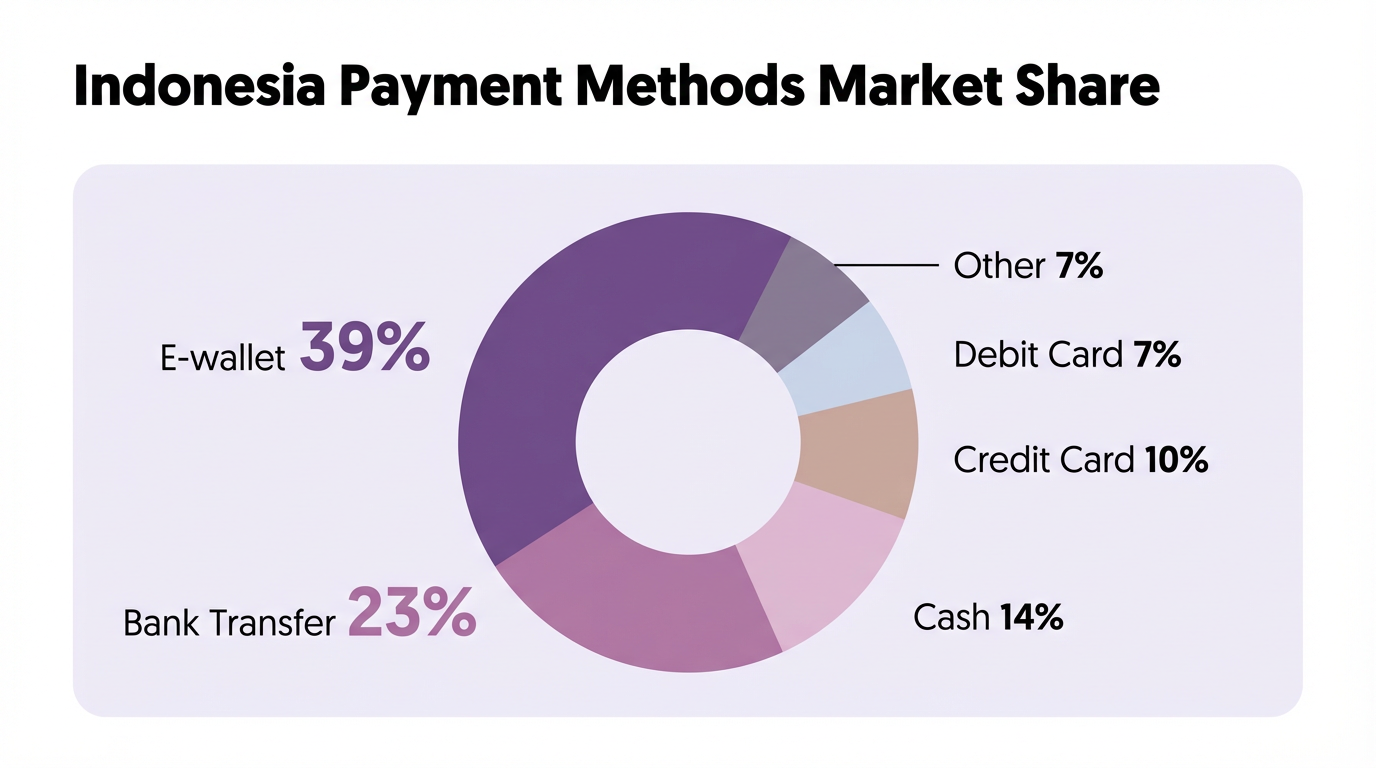
Indonesia's payment landscape is unique due to low credit card penetration (<20%) and high smartphone usage.
1. E-Wallets
The dominant force in payments.
-
Market Size: Projected to reach $9.11 billion by 2027.
-
Usage: Fills the gap left by credit cards for online payments, bill splitting, and transfers.
2. Bank Transfers (Virtual Accounts)
Virtual Account (VA) transfers are widely used for B2C and B2B payments. They are trusted, secure, and support cross-bank transactions.
3. QRIS (National QR Standard)
QRIS (Quick Response Code Indonesian Standard) is a game-changer launched by Bank Indonesia.
-
Function: A unified QR code that accepts payments from any e-wallet or banking app.
-
Impact: Simplifies merchant acceptance and accelerates cashless adoption.
4. Cash
While declining, cash is still used in rural areas lacking digital infrastructure.
5. Credit & Debit Cards
Penetration remains low (<20%). Most Indonesians prefer e-payments or "Buy Now, Pay Later" (BNPL) services.
04. Key Players: The Super Apps
DANA
Known as the "Alipay of Indonesia," DANA is a joint venture between EMTEK and Ant Financial.
-
Users: Over 170 million users.
-
Growth: QRIS transactions surged by 149% in early 2024.
-
Features: Deeply integrated with Lazada and Bukalapak.
OVO
A leading digital payment ecosystem often cited as the market leader by transaction value.
- Reach: Connected to Grab (ride-hailing) and Tokopedia (e-commerce).
GoPay
Embedded within the Gojek super app.
- Usage: Essential for ride-hailing, food delivery, and logistics. It has extremely high penetration due to Gojek's ubiquity.
ShopeePay
The integrated wallet for Shopee, driving e-commerce transactions with seamless checkout and cashback rewards.
LinkAja
The state-backed e-wallet consolidating services from major state-owned banks (Mandiri, BRI, BNI) and Telkomsel.
Buy Now, Pay Later (BNPL)
BNPL is booming as a credit card alternative.
- Key Players: Akulaku, Kredivo, and SPayLater allow consumers to pay in installments for electronics and fashion.
Conclusion: Seizing the Opportunity
Indonesia's massive, young, and digitally savvy population offers unparalleled opportunities. However, navigating the fragmented landscape of wallets and the dominance of QRIS is complex.
Waffo empowers your expansion
by providing a comprehensive payment solution that covers QRIS, DANA, OVO, Virtual Accounts, and local cards, ensuring you can serve every Indonesian customer seamlessly.