Japan, the world's third-largest economy, is a land of contrasts. While it boasts cutting-edge robotics and semiconductors, its payment landscape remains deeply rooted in tradition.
-
Resource-Poor: 90% of resources are imported.
-
Slow Recovery: The economy is "recovering slowly," driven by personal consumption.
-
Digital Paradox: A massive digital economy scale but relatively slow development due to privacy concerns.
-
Cash Culture: Despite the "Cashless Vision" push, 60% of transactions are still in cash.
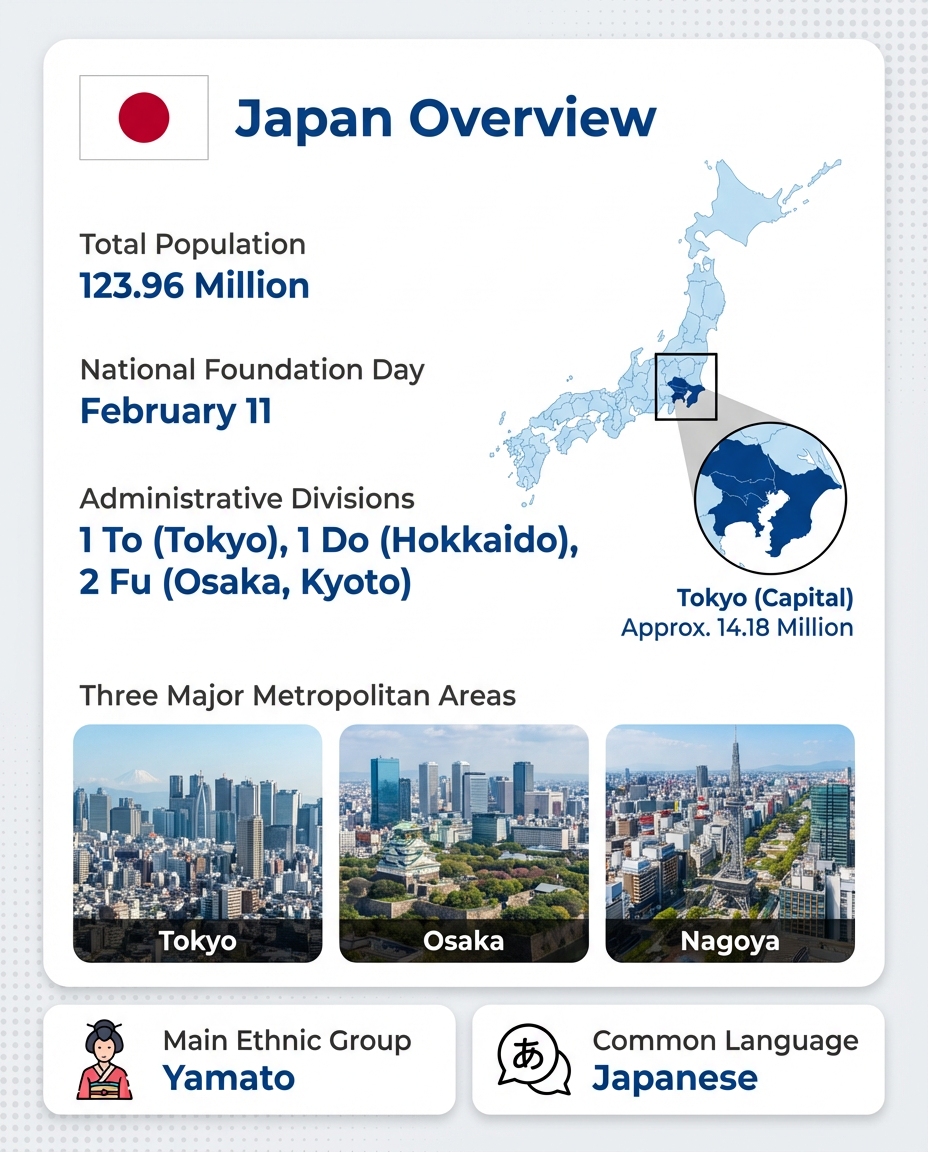
01. Economic Overview: The Giant Awakens
Basic Facts
Japan covers 378,000 sq km and is an archipelago nation.
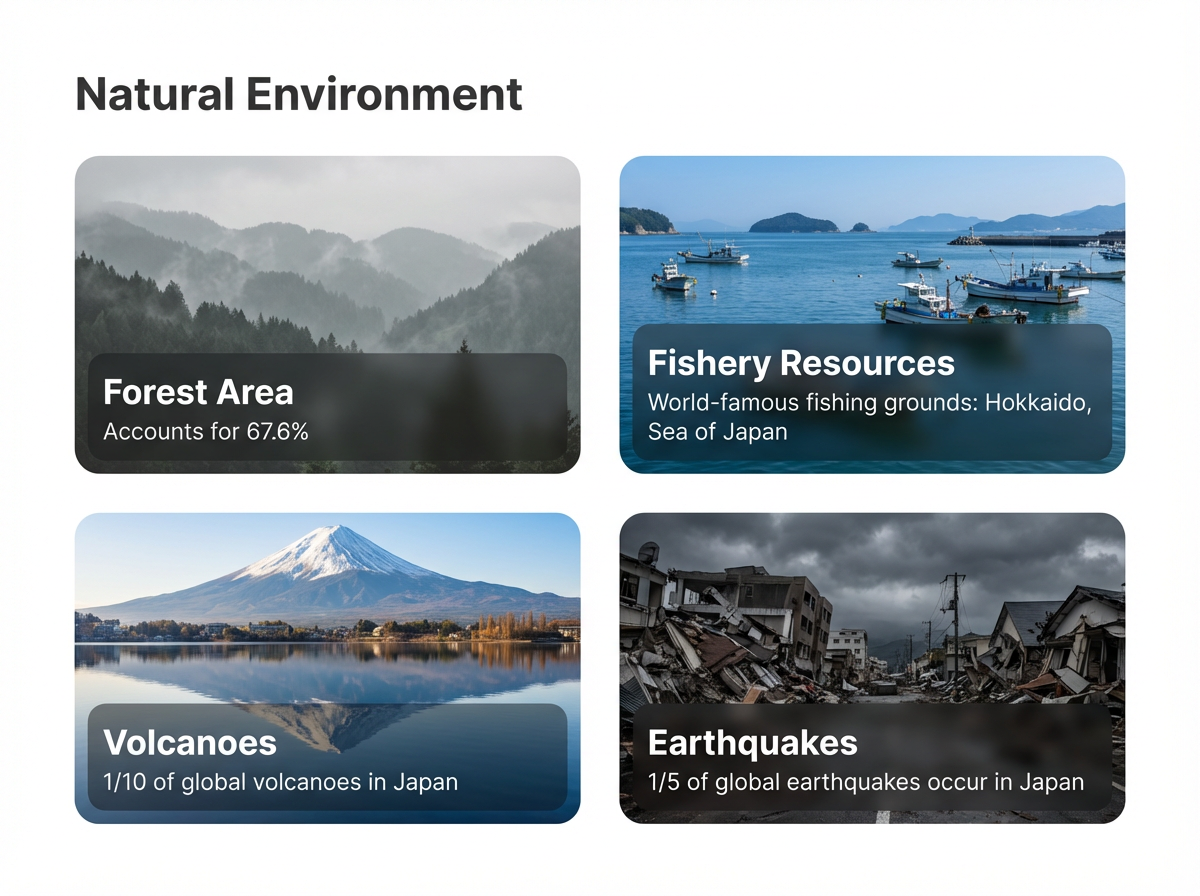
Economic Vitality
As a developed economy, Japan's GDP grew by 1.9% in 2023, reaching ¥559 trillion. It remains the world's largest creditor nation for 32 consecutive years. Key industries include semiconductors, automobiles, robotics, and shipbuilding.
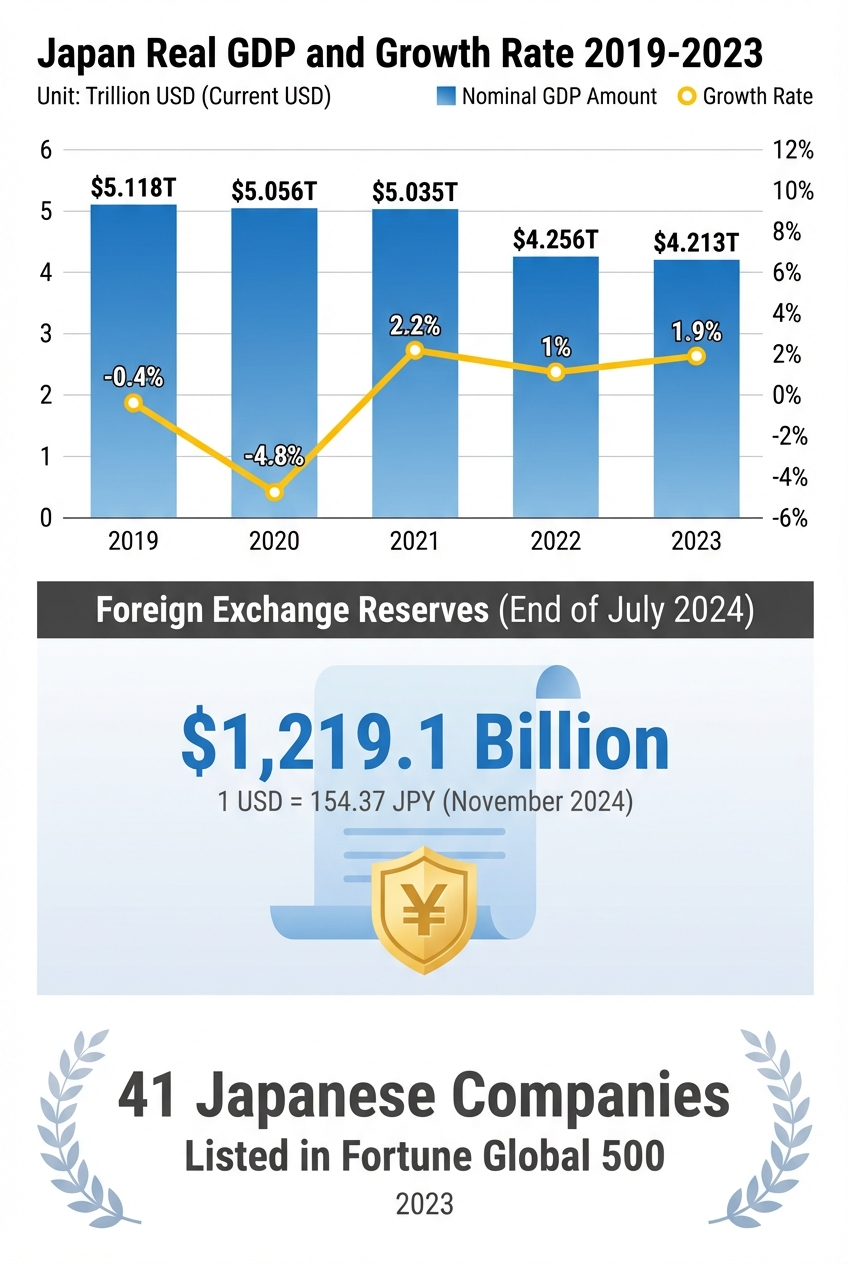
Trade Hub
In 2023, total trade reached ¥211.1 trillion. Japan maintains trade relations with ~200 countries, making it a pivotal market for global commerce.
02. The Digital Economy & Infrastructure
Infrastructure
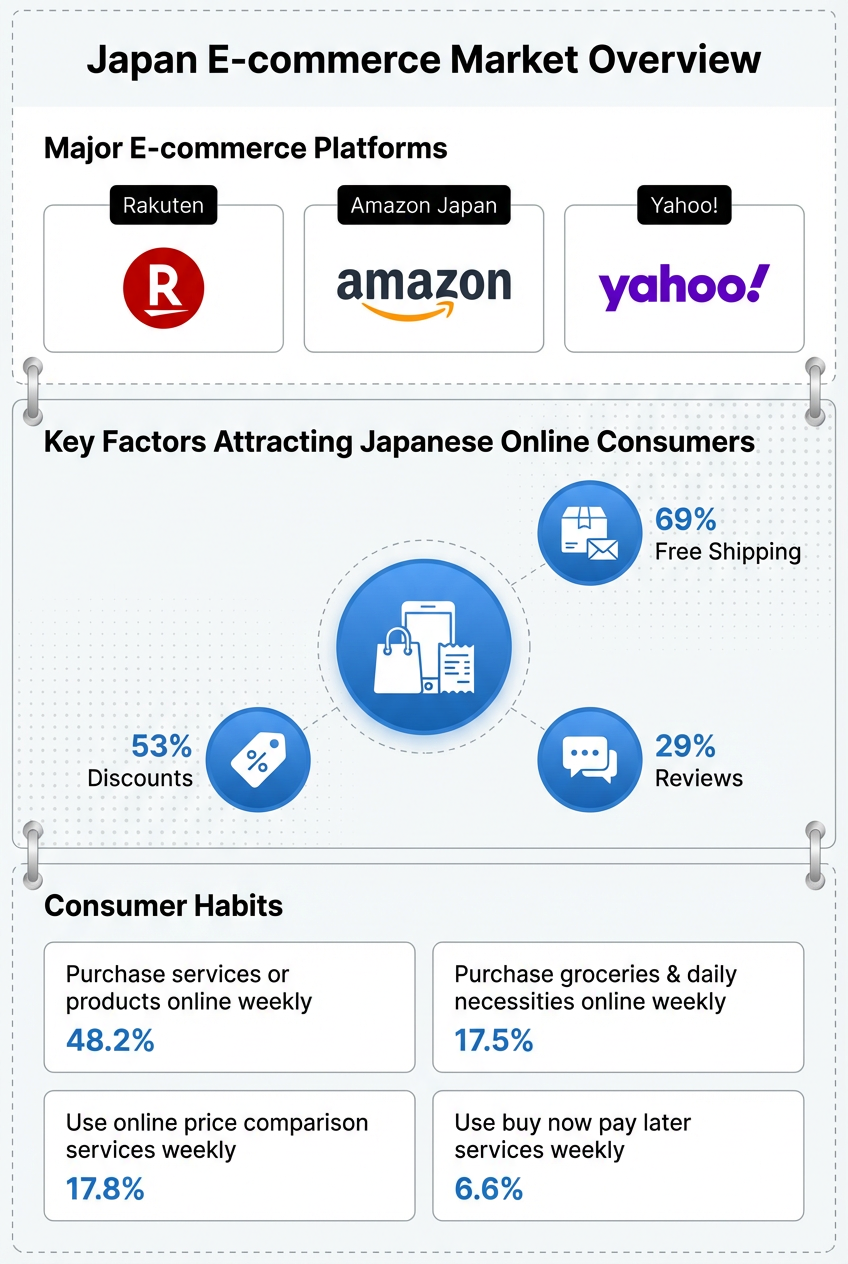
Japan's mobile network is highly advanced. Smartphone penetration soared from 4% in 2010 to 96.3% in 2023.
E-commerce: Steady Growth
Japan's cross-border e-commerce market ranks 3rd globally, projected to reach $130 million by 2023. While online shopping preference lags behind other developed nations, post-pandemic consumer behaviour is shifting rapidly towards digital channels.
03. The Payment Battlefield: Cash vs. Wallets
The Japanese government aims to reach a 40% cashless payment ratio by 2025, with a long-term goal of 80%. However, the market is fragmented.
1. Cash & Konbini (Convenience Store Payment)
Due to privacy concerns, cash is king (60% share). For online purchases, Konbini Payment is crucial.
-
How it works: Users order online and pay cash at a convenience store counter.
-
Key Players: 7-Eleven (21,000+ stores), FamilyMart (16,000+ stores), Lawson, Ministop, Seicomart, and Daily Yamazaki.
-
Why it matters: It is the preferred method for young people and the unbanked.
2. Credit Cards
While cash dominates small transactions, credit cards are standard for larger purchases and online shopping.
- Key Brands: JCB (Japan's local giant), Visa, Mastercard, AMEX.
3. E-Wallets (The "Pay Wars")
Unlike the duopoly in China, Japan's wallet market is a battleground.
-
PayPay: The leader with 57 million users and 47.5% penetration. Backed by SoftBank/Yahoo, it supports QR payments at 3.2 million+ locations.
-
Rakuten Pay (R Pay): Dominates the Rakuten ecosystem. Popular for its points system and ease of use (no credit card required). Holds 25.8% market share.
-
au PAY: Leveraging the massive user base of telecom giant KDDI. Users pay via smartphone and use Ponta points immediately.
-
Merpay: The payment arm of Mercari (C2C marketplace). Accepted at 1.7 million locations.
4. Bank Transfers (Pay-easy)
Over 10% of online shoppers prefer bank transfers.
- Pay-easy: A leading platform integrating multiple banks and ATMs for high-value transactions.
Conclusion: How to Win in Japan? Entering Japan requires respecting its "Cash Culture" while embracing the "Cashless Future."
-
You must offer Konbini payments to reach the mass market.
-
You need Credit Card support (especially JCB) for high-value goods.
-
You cannot ignore PayPay and Rakuten Pay for mobile-first users.
Waffo bridges this gap.
We integrate Konbini, Bank Transfers, Credit Cards, and E-Wallets into a single platform, ensuring your business is ready for every Japanese consumer, whether they pay with a smartphone or a 1,000-yen bill.