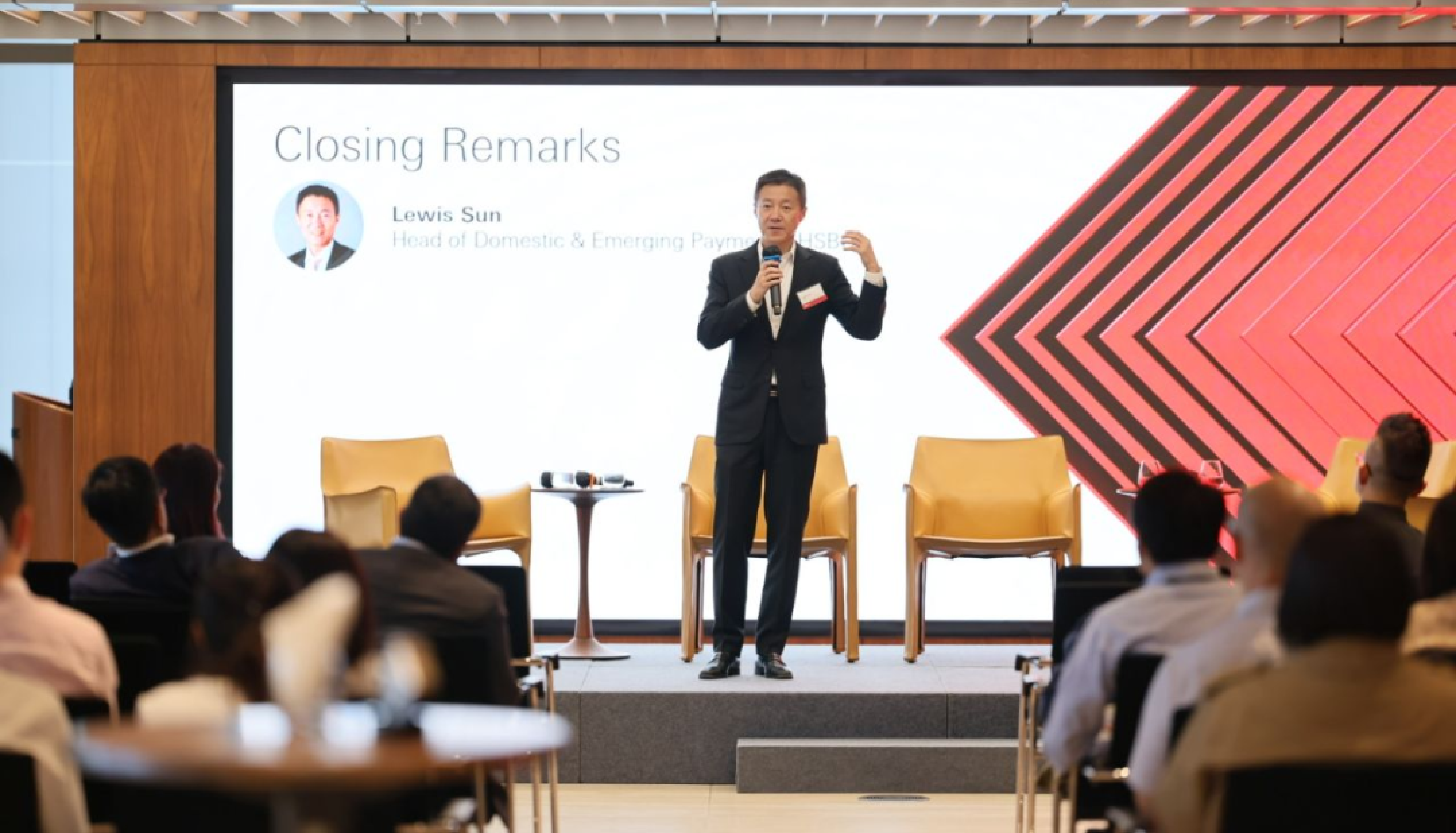
In an era defined by rapid-fire shifts in consumer behavior and the radical decentralization of retail, the question for modern merchants is no longer just how to build a product, but how to scale it without friction. Recently, Steve Shen, Co-founder and Chief Business Officer of Waffo, joined an elite panel at the heavyweight industry forum, "Growth in Action: How Merchants Thrive in Future e-Commerce," hosted by HSBC. The summit convened technology leaders and retail giants to dissect the "new logic" of digital growth—a logic increasingly driven by AI, social commerce, and a fundamental re-engineering of global payment architecture.
The Three Pillars of Modern Insight Against a backdrop of fragmented payment channels and escalating fraud risks, Shen outlined a forward-looking vision where payment systems evolve into a "Trust Coordination Layer." His analysis centered on three pivotal shifts:
- The Evolution of the Ecosystem: The rise of digital wallets and real-time settlements, augmented by AI-driven security, is redrawing the global map of money.
- The Convergence of AI and Finance: Data-driven decision-making is now the primary tool for protecting margins in high-volatility markets.
- Transparency in Cross-Border Financial Plumbing: Stability and security have transitioned from "back-office concerns" to the very bedrock of sustainable growth in emerging markets.

The AI Growth Model: From Community to Global Monetization Shen challenged the traditional linear narrative of business expansion, proposing instead a phased "leapfrog" model for AI and SaaS startups.
- Product-Market Fit (PMF): Community validation on platforms like Discord and X.com.
- Growth Ignition: Organic scaling via Product Hunt.
- The Global Monetization Challenge: Overcoming the "invisible ceiling" of payment fragmentation. He cited the trajectory of a generative AI client to illustrate this: The team first refined their product through developer challenges on Discord and X.com, ignited organic growth via referral mechanisms on Product Hunt, and then hit the "invisible ceiling" of global scale. As they expanded into the U.S., India, Brazil, and Japan, the sheer fragmentation of local payments—diverse regulations and cross-border settlement hurdles—threatened to stall their momentum. "The tipping point for growth isn't traffic; it's the payment layer," Shen noted. "You haven't truly entered the second half of the game until you can collect revenue globally with stability." As AI ventures expand into the U.S., India, Brazil (Pix), and Japan (PayPay), the complexity of localized regulations requires a robust Merchant of Record (MOR) strategy to maintain momentum. Waffo’s Three-Tier Orchestration Engine To navigate global complexity, Waffo has engineered a Payment Orchestration Engine via a Single API:
- Unified Access Layer (Single API): A singular integration that bridges over 430 localized payment methods, from Japan's PayPay to Brazil’s Pix.
- Smart Routing Engine: Much like an air traffic control system, this engine monitors success rates and latency in real-time, intelligently directing each transaction through the most efficient path.
- Compliance & Data Sovereignty: Automating VAT/GST calculations and anti-fraud screening to turn regulatory friction into a background utility. Payment as the Currency of Trust In global commerce, payments are the currency of trust. By synchronizing capital and information flows in real-time, Waffo provides the "Visible Certainty" that modern enterprises demand. Backed by HSBC, Gaorong, and BAI Capital, Waffo is acting as the strategic architect for the next golden age of digital commerce. As digital competition shifts toward efficiency and user experience, the winners of the "next golden age" will be those who treat payment orchestration not as a utility, but as a competitive advantage.