Thailand is a key member of ASEAN and its second-largest economy. Since joining the WTO in 2006, it has actively integrated into various free trade agreements, accelerating economic and political reforms.
-
Trade Hub: A rare low-tariff country in today's world, attracting significant foreign investment.
-
Export-Driven: Exports account for 2/3 of GDP, totaling $284.5 billion in 2023.
-
Middle Class: Retailers are expanding into non-urban areas to serve a growing middle class.
-
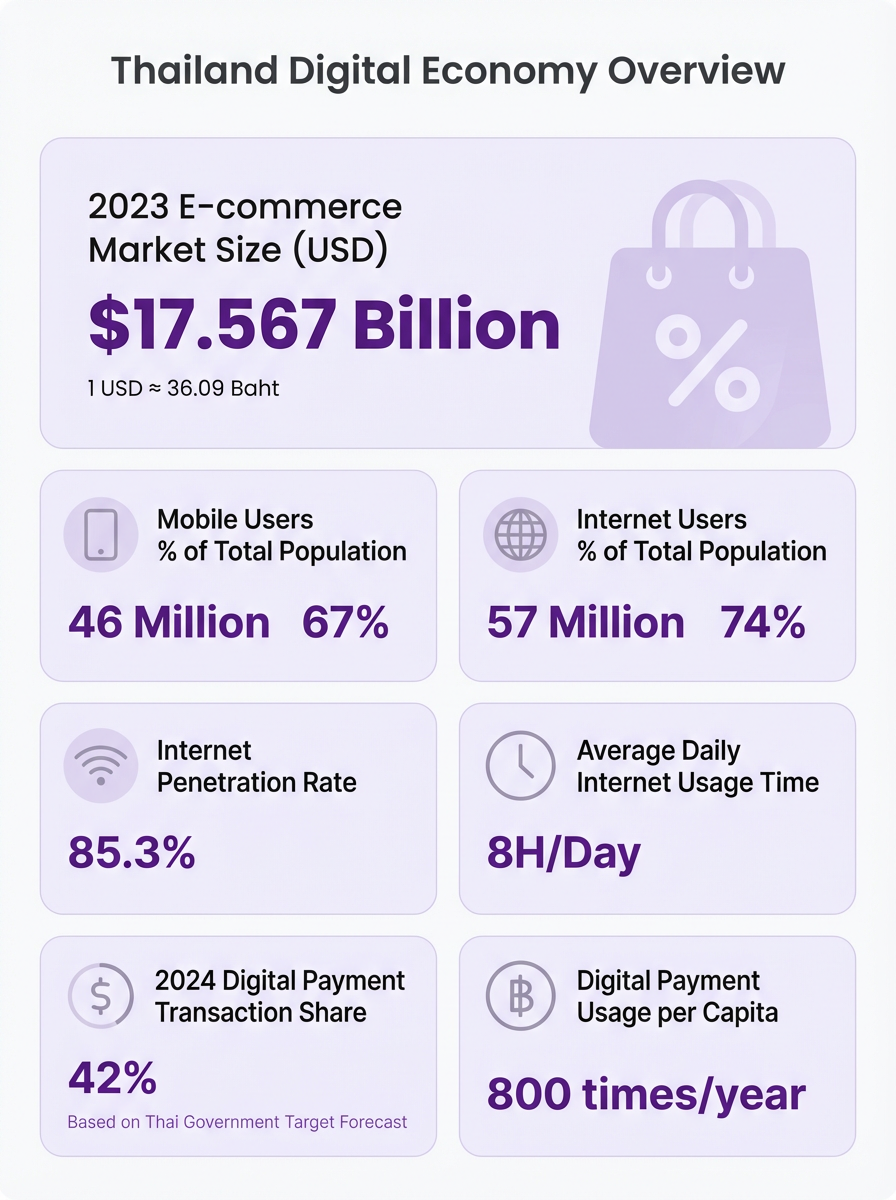
Digital Boom: Internet penetration and social media usage rank among the top 10 globally.
-
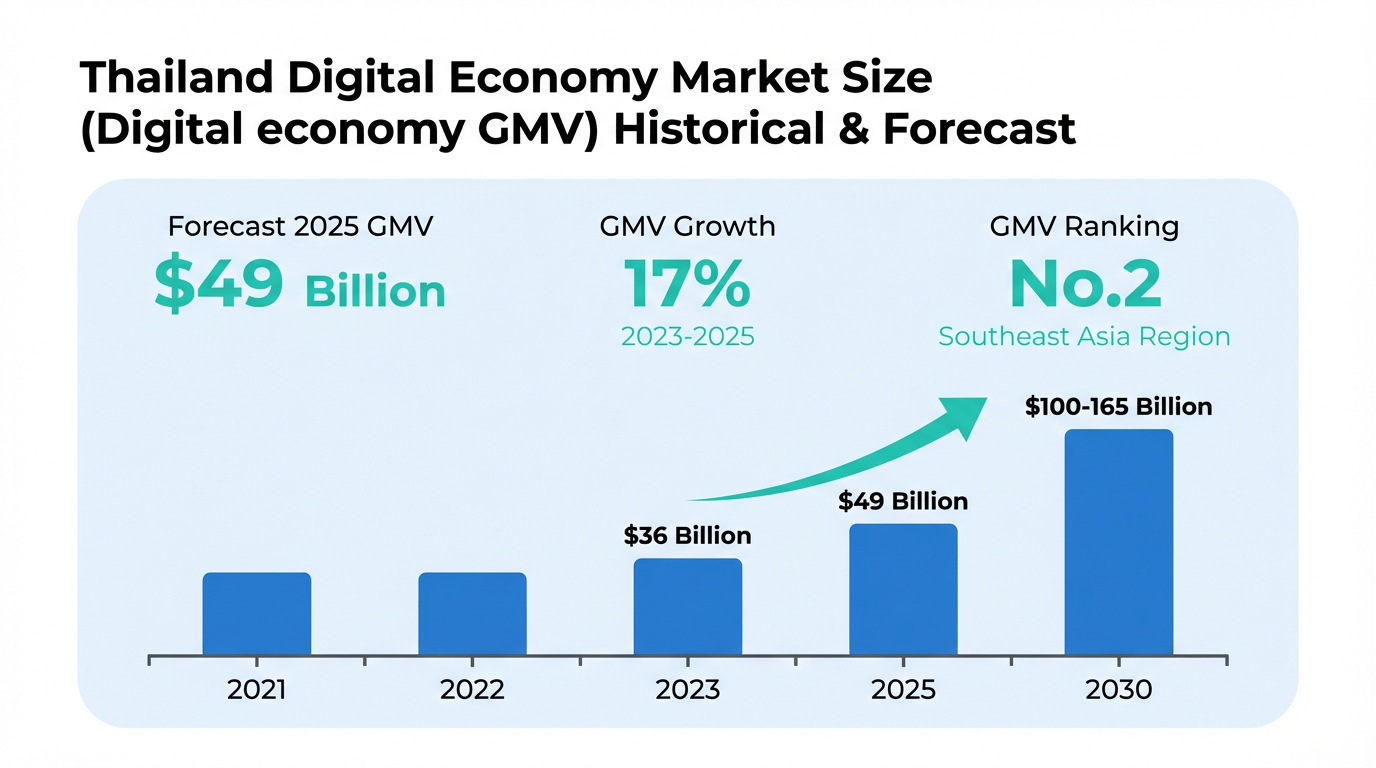
E-commerce Growth: The digital economy GMV is projected to grow from $36 billion to $49 billion by 2025 (17% CAGR).
01. Overview: The Heart of ASEAN
Economic Vitality
Thailand's economy is heavily reliant on exports, highlighting its crucial role in global trade.
-
Total Trade: Reached $574.3 billion in 2023.
-
Key Partners: China, Japan, ASEAN, US, and EU.
-
Retail Expansion: With a population of 67.9 million, the retail sector is robust, adapting to the needs of modern consumers.
02. The Digital Economy: "Thailand 4.0"
Thailand is pushing for digital transformation through its "Thailand 4.0" economic model.
-
Retail Shift: Retailers are adopting multi-channel strategies to enter this booming market.
-
E-commerce: Thailand ranks high globally for online market potential. The steady growth of e-commerce is driving the digital economy to become the second largest in Southeast Asia.
03. The Payment Battlefield: Banks vs. Wallets
The mobile payment market consists of bank-led solutions, local wallets, and localized international players.
1. Bank Transfers
Bank transfers are deeply ingrained in Thai consumer habits, supported by widespread ATM networks and consumption scenarios. It is the most preferred payment method.
2. E-Wallets (TrueMoney & Rabbit LINE Pay)
The cashless drive has boosted e-wallet adoption.
-
Local Wallets: TrueMoney, Rabbit LINE Pay, ShopeePay.
-
Cross-border Wallets: Alipay, WeChat Pay.
3. Credit & Debit Cards
While credit card penetration is lower, card payments still account for 30% of transactions, with debit cards making up 77% of that share.
4. QR Payments (PromptPay)
PromptPay is the national standard for QR payments.
-
How it works: Links ID numbers or mobile numbers to bank accounts.
-
Popularity: Extremely convenient and widely used for P2P and merchant payments.
5. Cash
Despite the digital shift, cash still accounts for 15% of transactions.
04. Key Players: The Digital Leaders
With high smartphone penetration and government support, digital payments are surging.
TrueMoney
Known as the "Alipay of Thailand," it is a joint venture between Ascend Money and Ant Financial.
-
Market Leader: Over 20 million users (2024) and 50M+ downloads.
-
E-commerce Share: Captures 1/4 of the e-commerce market.
-
Features: Supports cross-border remittances, 7-Eleven payments, and bill payments. No bank account required for registration.
Rabbit LINE Pay
A joint venture between LINE, BTS Group, and AIS.
-
Integration: Embedded in the LINE messaging app.
-
Usage: Essential for BTS skytrain rides, mobile top-ups, and peer transfers.
ShopeePay
The integrated wallet for the Shopee e-commerce platform.
- Omnichannel: Used for both online Shopee purchases and offline merchant payments via QR code.
Major Banks & PromptPay
-
Banks: Kasikornbank (KBank), Siam Commercial Bank (SCB), Krungsri, and Bangkok Bank offer comprehensive digital services.
-
PromptPay: The ubiquitous QR payment system linking the entire banking sector.
Conclusion: Seizing the Opportunity
Thailand offers immense potential but comes with intense competition. As Chinese and global enterprises flock to this market, the risks rise alongside the rewards.
Waffo empowers your expansion
by providing a comprehensive payment solution that covers PromptPay, TrueMoney, local cards, and bank transfers, ensuring you can serve every Thai customer seamlessly.